Recently, I began reconsidering a set of old pressboard binders that took up shelf space in the condominium where my wife and I lived for half a decade and brought home our newborn, more than a few square feet in the storage unit I took out when we moved abroad, and my line of sight when we returned to the U.S. three months ago and moved into what I’ve started thinking of as the House Among the Pinestraw. The chief offenders had the density of Vasily Grossman’s Zhizn i sudba (about which more later); these were hard copies of academic articles I had been holding on to since I started going back to graduate school almost exactly a decade ago. When I hauled them to the recycle center, having no idea I would be writing about this, I took no care to record authors or titles, though nearly all of them surely ended up in such Mulligan’s stews as “Currents and traditions: An historiography of rhetorical instruction in U.S. higher education” and “Sneaking in words: The development of authorial identity among untenured faculty,” and “Developing an English-speaking student self: A study of international students in English medium programs at a Finnish university.” Hardly research areas that M.Ed. programs in the U.S. are intended to address, though I didn’t know that at the time. But rereading my old papers (whose impact on our shelves is as modest as I’m sure they were on my professors), it was the third of these titles I was most curious about, not so much to see if my one and only foray into IRB-approved qualitative research had stood the test of time, but for the sake of a single entry in the works cited page.
I remember when Karolina Kalocsai’s Communities of Practice and English as a Lingua Franca (2014) arrived in our mailbox. It was a typically expensive purchase from DeGruyter press, but it was nowhere to be found in the University System of Georgia’s library system, and I was certain it would be an indispensable source as I prepared for a marathon of Skype interviews with graduate students from Korea, Russia, Portugal and elsewhere, on Eastern European Summer Time. After all, Kalocsai’s study of Erasmus exchange students at a Hungarian university, and the “families” that emerged organically from their brief time together, focused on the kind of English-mediated experiences I might discover in Finland, albeit of the graduate school variety, and posing questions (e.g., “How has your development as an English language learner influenced your approach to this field of study, and vice versa?”) that might elicit phenomenological insights unexplored in Kalocsai’s model. Gap in the literature addressed? Check.
As it happens, my project elicited nothing of the kind, although I did discover the importance to non-native speakers in English-medium programs (better known on the continent as CLIL) of delivering oral presentations—apparently a curricular feature of some importance in the Finnish system at the time, and an exercise I have long since integrated into my own teaching (one M.A. in Applied Linguistics later), thanks to this finding. But what surprised me, and the chief reason I reread this apprentice work in the first place, was how little of Kalocsai was in it. In fact, I could find no references to her work in my paper other than the works cited, although I did find a few in another I wrote at the same time on the Bologna Process for my Organization and Governance seminar, so my investment in DeGruyter paid off at the time in some way. On reflection, however, as I rediscover the book, its omission isn’t surprising: Kalocsai’s project was an on-site, participatory study of undergraduates doing undergraduate things together (drinking, storytelling, planning excursions, etc.), while mine was a series of semi-structured one-shot interviews with graduate students who I’m pretty sure did not know each other and (being graduate students) had little time to socialize, much less reflect on the phenomenological implications of their L2. As her title implied, Kalocsai employed a community of practice approach, with non-native English as the “shared practice” by which her subjects’ social bonds and loyalties, however temporary, were formed. My improbable theoretical touchstones ranged from Baxter Magolda’s arguably American-centric idea of student self-authorship to—of all things—Foucault’s theory of governmentality (something about my subjects indirectly fulfilling the economic goals of the European Commission by becoming proficient in English in the first place). In short, even now I have the impression that Kalocsai had more fun.
Whether I would have embraced the chance, years later, to teach for two years as an English Language Fellow at the University of Szeged, the site of Kalocasi’s research, without first having known about the place through her book, I cannot say. Might I have regretted it? Indeed. Another ELF, assigned elsewhere in Hungary at the same time I was, quit after a year, and even my students at SZTE could never get why I “chose” Hungary, no matter how I contextualized it. My explanations became routine. Hungary had chosen me; I had ancestral roots there (my great-grandfather’s last known address in the old country, as indicated on his immigration papers, was only 90 minutes south, albeit across what is now the Serbian border, crossed effortlessly and re-crossed only if you have half a day to waste and lack an EU passport); I had developed a taste for halászlé (the pho of the Tisza River) and kadarka (the red wine with a white body and cranberry bite); I was finding the language easier than I expected, köszönöm a kérdését.
Things were, if anything, initially more delicate with my colleagues, a few of whom had been Karolina’s own in simpler times, and who remembered her fondly. The university, like other first-tier sister institutions in Pécs and Debrecen, had only months before my arrival agreed to a controversial privatization agreement with the Orbán government, shedding its identity as a state-funded entity to become an asset management foundation, i.e., a non-profit managed by a board of trustees—a change which, on its face, few American students of higher education would lose sleep over, unless you have been paying attention to how toxic this time-honored model has become on various campuses in recent years here. Even the obvious criticism that a controlling majority of Fidesz party loyalists would enjoy lifetime appointments on these boards didn’t surprise me, except maybe the trustee life span thing, unless you count the interminable life span of political party affiliations in the same category here. But resigned acceptance is relative, and I may have missed an opportunity to ask more questions about what was essentially a case study of an endangered species of institution, or the birth of a new one, take your pick. (The fate of the George Soros-affiliated Central European University never came up in conversation, but was always in the background.) At any rate, as of SZTE’s transition, gender studies was no longer an option at the undergraduate level, and the teacher training program was already subject to what was often described (in so many words) as top-down meddling. As I myself inferred in the founding post of this blog, the future of academic freedom and the culture of university boards are not loosely coupled enough.
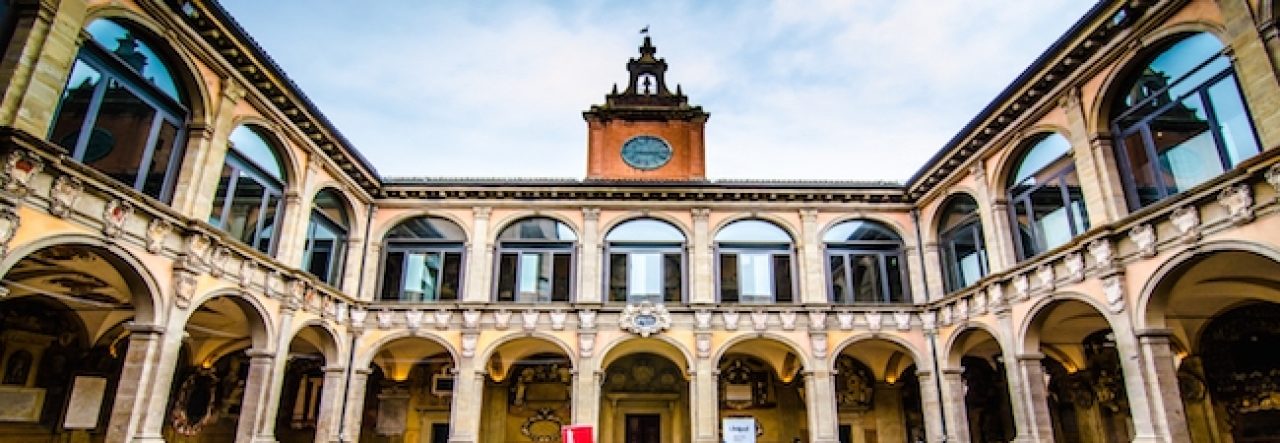
All of this was well outside my remit as a cultural diplomat; it also seldom penetrated the interior of my classrooms in either the high-ceilinged, neoclassical Bölcsészet- és Társadalomtudományi Kar (i.e., arts and social sciences center or “BTK”) or the cramped, Kádár-era Petőfi building across the through-street. Which isn’t to say that my students—especially the fifth-year teacher trainees whose uniquely Hungarian blend of acid humor, self-irony, and fatalism was perfectly appropriate given the treatment, and salaries, of the profession there—didn’t sometimes allude to it, or that I didn’t give space to vent about it, or even on a rare occasion elicit opinions about it (i.e., provide discussion questions for my trainees about Tucker Carlson’s interview with a fluently English-speaking Viktor Orbán). In fact, I found early on that Hungarian students will not allude to anything before they can be persuaded to speak in the first place, and even then for a particular reason, e.g., to respond to an oral exam prompt. Which was, in hindsight, fine, although I say so at a distance now of almost six months and several thousand miles. A constant theme when talking about students in Hungary is the state of secondary education, that even when kids make it to university, their faculties of speech have undergone the pedagogical equivalent of foot-binding. (Point of fact, I was not “teaching English”; my students had been through endless grammar-translation exercises in high school, and were nearly done for.) The point is that I knew I had a good thing going at SZTE, odd classroom hours, muted undergraduates, capricious wifi, and all: there is no greater privilege than to be asked to listen, to read, to bear witness to emerging voices.
***
“Every man has his own patch of earth to cultivate. What’s important is that he dig deep.”
José Saramago [translation unknown]
“Artists,” said Pasternak, “are optimists by nature. Optimism is the essence of creativity.”
Boris Pasternak [my translation]
Along with a compulsion to make my own fish stock and a dream of cultivating grapes along some loamy plateau and boring a cellar into the ground underneath, I brought back from Szeged a renewed appetite for literary fiction. This legacy can be traced directly to the beer-and-pálinka evenings I enjoyed with two other native speaker friends when a week’s classes were behind us, a few of which were dedicated to an unofficial “book club.” I can’t say a lot of deliberation went into choosing titles. I suggested Sergei Dovlatov’s The Suitcase a.) because it was short and b.) because, in Russian at least, it was hilarious; perhaps unconsciously, it may have also had something to do with the invasion of Ukraine having just taken place next door, scarcely a month after our first and perhaps only Christmas in St. Petersburg for the foreseeable future. We may have picked Saramago’s Gospel According to Jesus Christ simply because I had returned with my wife and daughter from Portugal, but one of our party found it a slog. Miklós Vámos’s The Book of Fathers (“a European best-seller”) was our only Hungarian entry—there was always a puzzling bias against Hungarian literature over there—whose depiction of family and survival transcended its Red Violin-type formula. In any event, there was always another round of drinks.
As of this writing, I am one-eighth of my way into Grossman’s Life and Fate, one of my first post-reentry acquisitions, the only one I can’t remember my motivation for ordering and probably the first Russian text I have acquired in decades which was not in Russian. I treasure my copy of Antal Szerb’s literary essays (“The Magician Breaks His Wand”) in Hungarian, picked up at one of SZTE’s secondhand book sales in the BTK lobby; so far I have only managed his wonderful wartime essay on the centenary of the Chain Bridge:
Because I can no longer travel abroad, I try to play a game within myself which helps me calm down and go to sleep: I pretend that I am wandering around the streets of Budapest as if I were a stranger there, and discovering its wonders for the first time. [my translation]
While I have yet to read more of Szerb outside such ad hoc translations and his delightful, unabashedly Anglophile and utterly un-Hungarian novels, I can without reservation nominate Szerb as my candidate for the Pasternak Optimist Prize. (Not ironically, writing as a Jew in the last years of Admiral Horthy’s fragile oasis of sorts within the Axis, Szerb was a stranger in Budapest.) The working difference between optimists and pessimists, now that I am making myself think about it, may consist simply in the fact that pessimists like myself are pessimistic about particular things (e.g., the Chain Bridge will be closed to traffic from the time I arrive in Hungary until shortly after I leave, which it was), while optimists are optimistic about things in general (e.g., although the Chain Bridge may be closed, we will have all of Budapest, which we nearly did). I have far less to go on as far as Grossman’s novel is concerned; imagine my surprise that Zhizn is actually the sequel, if such a term applies, to Stalingrad, which I have yet to crack. Grossman was a chronicler, an observer, whether witnessing the arrival of the Holocaust on the Soviet frontier through the eyes of a mother, or channeling the perspectives of “historical” people, like the Ukrainian commander for the defense of Stalingrad, Andrei Yeremenko, having ferried over and back and listening to the sounds from across the river:
Instead of valour or gallantry, you could hear the sadness of a soul parting with everything that it loved, calling on its nearest and dearest to wake up, to lift their heads from their pillows and hear for the last time the voice of a father, a husband, a son or a brother. [translation: Robert Chandler]
Whatever one’s orientation—optimist, pessimist, tourist, coin your own—Saramago’s image of an imagined waterborne summit between God and the Devil has stayed with me:
Jesus lowered his oars into the water and said, Farewell, I’m off home, and you can both go back the way you came, you by swimming, and You by disappearing as mysteriously as You came. Neither God nor the Devil stirred, whereupon Jesus added ironically, Ah, so you prefer to go by boat, better still, I’ll row you ashore myself so that everyone may see how alike God and the Devil are and how well they get on together. [translation: Giovanni Pontiero]
My sympathy with swimmers has been noted in an earlier post. But then, pace Pasternak, Saramago was a noted pessimist, which makes me skeptical that I even remember how to read fiction, given how much brighter the world seemed after I finished Balthasar and Blimunda and The Year of the Death of Ricardo Reis, even if—or precisely because—their sad endings seemed not just inevitable, but right.
Do I really have to pick sides where words are concerned? I have put Grossman on hold for the time being. Meanwhile, my Szeged library is now hardly worth the name—some Krúdy, Kosztolanyi’s Skylark, Molnár’s Pál Street Boys, and a wonderful bilingual anthology of the country’s poetry, but no more Magda Szabo, no Laszlo Krasznahorkai—thanks to checked-bag weight limits.
***
I would like to have known Miklós Radnóti. There are other candidates for poet laureate of Szeged, but while the statues of the other contenders, native son Gyula Juhász and József Attila, are more prominently displayed, the first didn’t even attend the university, the second failed to graduate; both were suicides. Radnóti I first became acquainted with while waiting outside the Radnóti Miklós Kísérleti Gimnázium, where I would sometimes present on U.S. cultural topics to students in English classes: Miklós embraced by his wife Fanni Gyarmati (1912-2014), a bronze anti-Pietà. As I recall, Miklós stood boldly facing up the Tisza, which made sense given that the main entrance of the high school was turned that way, but perhaps also a symbolic one, since the forced labor that ended with his murder and those of other Jewish-born Hungarians in the last years of the war began some 400 kilometers downriver in Serbia. It was several months before I noticed the wall plate displayed outside the BTK, commemorating Radnóti’s presence there (as a student of French and Hungarian literature) from 1930 to 1935. While I disliked ever being assigned classroom X at the far end of the building’s ground floor, to get there I always passed two portrait photographs of him, one of him alone and one with Fanni, mounted without captions or identifiers of any kind, as if I were passing through someone’s living room.
I cannot, however, know how terrible it was to be a Hungarian Jewish poet, at the University of Szeged or anywhere else in Europe, during the brief time (1909-1944) in which he lived and worked, under the inexorably worse and worse conditions of Hungary under the alternately hapless and fascist manqué regency of Miklós Horthy, as described in Zsuzsanna Ozsváth’s biography of the poet, who appears to have wound up at what was then known as Ferenc József University only by default; he had been denied admission to Pázmány Péter University in Budapest, a casualty of the country’s Numerus Clausus law. Still, it was not the Szeged I knew: a Szeged of the Arts College, an informal circle of poets, artists, and aesthetically inclined outcasts of many stripes; of outspoken idealists, socialists, and “internationalist”-minded intellectuals; of random on-campus assaults on the foregoing, primarily Jews; of three volumes of Radnóti poetry, among them Újmódi pásztorok éneke (Songs of the New-Fangled Shepherds), which was confiscated by the authorities for indecency and its author put to trial (though later acquitted, in Budapest).
Ozsváth’s is an academic monograph, not a popular biography, and the author may be better known as an accomplished translator, but even without access to an alternative, In the Footsteps of Orpheus reads almost the way I would expect of a man who lived to the age of 35, glimpsed through a curated handful of journal entries, secondary sources, occasional photos, and verse produced under impossible circumstances. Almost, because the adult Radnóti never had the luxury of a creative life without the premonition of disaster, even if it was his creative genius (and Fanni, of course) that made some degree of transcendence possible when the disaster became real. Radnóti comes across as a classical poet in a twenty-first century hurry: even before the war, he undertook translations of Virgil’s Eclogues, and gradually synchronized their metrical heartbeat with his own. “Say, is there a country where someone still knows the hexameter?” he would later ask in the terrible year of 1944.
Although it is a mug’s game to speculate on where any creative work came into being—Bartók at least premiered his three-minute “Four Old Hungarian Folksongs” in Szeged in 1911—I had never read Mint a Bika (“Like a Bull”), composed during his undergraduate years in Szeged, and analyzed with considerable care by Ozsváth. Radnóti is rightly celebrated for the monumental beauty of the poems brought into being at the Heidenau labor camp in the last months of his life—“Letter to My Wife,” “A La Recherche,” the Seventh Eclogue—but this youthful depiction of a quasi-mythical animal, prepared to defend his turf even if it means being buried beneath it, seems to me uncannily to foreshadow the wartime protest planted in the first lines of Nem Tudhatom (“I Know Not What”): “I know not what to strangers this dear landscape might mean,/to me it is my birthplace, this tiny spot of green.” By then, the advancing wolf packs of the earlier poem were already through the door.
 THE HIGHER EDITION